

What “Blending In” Actually Looks Like (And Why You Can’t See It Happening)
You followed the templates, mirrored what worked, and built something "professional." So why does your brand still feel invisible? Here's how to spot the patterns that make founders forgettable.

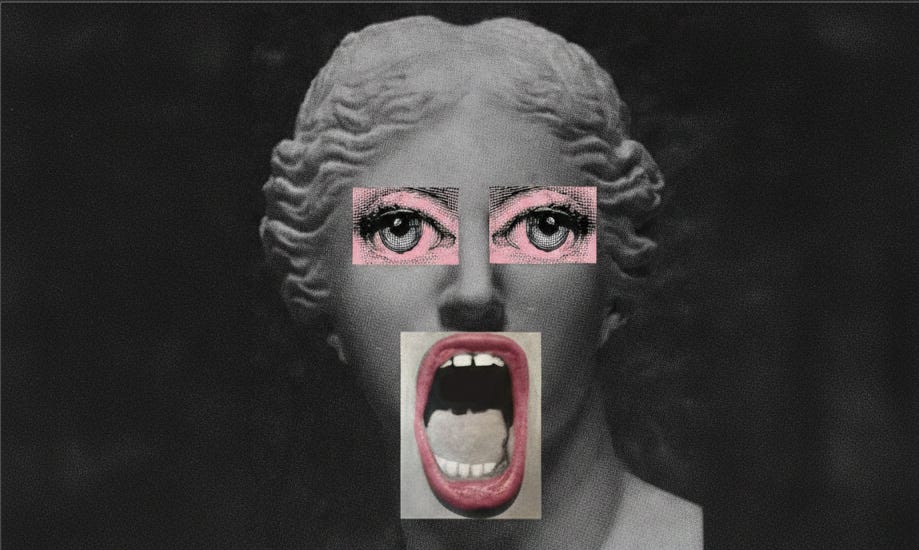
Here’s something nobody tells you when you start a business:
You can build a brand that looks good, sounds professional, and checks all the boxes but still be completely invisible.
It’s not that you’re invisible because people don’t see you, but because when they do see you, nothing registers. Nothing sticks. Nothing makes them stop scrolling and think, “Wait, who is this?”
That’s what blending in looks like, and the brutal part is you usually can’t see it happening to your own brand because you’re too close.
You know what makes you different and you know your story, your values, your why. So when you look at your brand, you see all of that.
Your audience doesn’t. They see what’s on the surface and if the surface looks like everyone else’s, they scroll past before they ever get to the good stuff underneath.
Today I’m showing you exactly what blending in looks like in practice, so you can spot it if it’s happening to you.
The Blending In Checklist
Here’s how to know if your brand is accidentally invisible. Be honest with yourself.
Your visuals could belong to anyone in your industry.
Open your Instagram grid, your LinkedIn or your website. Now imagine a competitor’s logo slapped on it instead. Does it still work? Could it be mistaken with theirs?
If yes, the problem is your visual identity. Not because your design is bad (probably it’s perfectly nice), but because “nice” doesn’t stop a scroll. “Nice” is what every brand defaults to when they’re afraid to be specific.
Soft colors, clean fonts, minimal aesthetic, stock photos or generic Canva templates. It’s safe. It’s polished. And it’s also what every other brand in your space is doing right now.
Safe visuals are expensive. Not in a money kinda way. In attention.
Your copy sounds like a category, not a person.
Read your homepage or your Instagram bio out loud.
Does it sound like you talking or does it sound like a brochure?
“I help women build confidence and create the life they deserve.” “Empowering female entrepreneurs to reach their full potential.” “Holistic solutions for modern business owners.”
These sentences mean nothing. Not because the words are wrong, but because they could apply to literally anyone. There’s no edge, no specificity, and no point of view.
When your copy sounds like a category instead of a person, people mentally file you under “another one of those” and move on.
You’re describing what you do instead of what you believe.
Most brands talk about their services, their process, their offers, what they do, how they do it, and what’s included.
That’s necessary information, but it’s not what makes people choose you.
People don’t buy what you do, they buy why you do it. They buy the worldview behind it. They buy your stance, what you believe, and what you stand against.
If your brand only communicates the what without the why, you’re competing on features, and feature competition is a race to the bottom. There’s always someone cheaper, faster, or more experienced.
But no one can compete with your perspective. That’s yours alone.
You’re trying to appeal to everyone.
You’re afraid to be too specific because you don’t want to exclude potential clients. So you keep your messaging broad, vague, or open to interpretation.
“I work with entrepreneurs and creatives who want to grow.”
Cool. So does everyone else.
Broad positioning feels safe because it doesn’t turn anyone away. But here’s what actually happens: it doesn’t pull anyone in either. When you try to speak to everyone, you end up resonating with no one.
The brands that stand out are ruthlessly specific. They know exactly who they’re for and they’re willing to say who they’re not for. Because of that clarity, the right people feel like the brand is speaking directly to them.
You’re uncomfortable with polarization.
This is a big one.
Blending in isn’t always about bad design or vague copy. Sometimes it’s about fear. Fear of being too much, fear of turning people off, fear of having an opinion that not everyone agrees with.
So you soften, you round off the edges until your brand is smooth and inoffensive and utterly forgettable.
Here’s the thing about polarization: it’s not about being controversial for the sake of it, it’s about being clear enough that some people opt out.
When some people look at your brand and think “this isn’t for me,” that’s a sign you’re doing it right. Because the people who do resonate will feel it stronger, they’ll lean in harder and they’ll trust you faster.
You can’t build a loyal audience by being palatable to everyone because loyalty comes from meaning something to someone.
How Brands Accidentally Blend In
Nobody sets out to be forgettable. So how does it happen?
You followed the templates.
You Googled “how to build a brand.” You watched YouTube videos about branding. You downloaded Canva templates. You followed the “proven” formulas for bios, taglines, and color palettes.
But you ended up with a brand that looks exactly like everyone else who followed the same templates.
Templates aren’t bad. But they’re starting points, not endpoints. If you don’t add your own edge, your own voice, your own stance, you’re just filling in someone else’s blanks.
You looked at competitors and mirrored what worked.
This feels smart. Look at what successful brands in your space are doing and do something similar.
But here’s the problem: if you mirror what works, you become a copy of a copy. You’re not competing with them, you’re blending into them.
Competitor research should tell you what to avoid, not what to copy. Find the patterns everyone else is following, then break them intentionally.
You prioritized “professional” over “distinct.”
Somewhere along the way, you learned that being taken seriously means sounding professional. So you stripped the personality out of your copy. You chose safe colors instead of bold ones. You wrote a bio that could go on a corporate website without raising any eyebrows.
Professional is a mask, and masks don’t build connection.
The brands people love don’t sound professional. They sound human, they sound like someone, they have opinions, quirks, and rough edges that make them feel real.
You kept iterating without a foundation.
This is the silent killer.
You’ve been tweaking your brand for months. New colors, new fonts, new bio, new offer name, new content strategy. You keep changing things hoping something will click. (Looking at myself, here)
But you’re iterating on top of a weak foundation and no amount of surface-level changes will fix a positioning problem.
It’s like rearranging furniture in a house built on quicksand. The arrangement doesn’t matter if the ground is unstable.
The Cost of Blending In
Let me be clear about what’s at stake here.
When your brand blends in, you don’t just get less engagement, you get the wrong kind of attention.
You attract price-shoppers because there’s no perceived difference between you and the cheaper alternative.
You attract tire-kickers because they’re not sold on your specific approach; they’re just browsing options.
You attract clients who don’t fully get what you do because your brand didn’t filter them properly.
And you exhaust yourself trying to convert people who were never the right fit in the first place.
A distinct brand does the filtering for you. It attracts the right people and repels the wrong ones before you even have a conversation.
How to Know If It’s Happening to You
Here’s a quick gut check:
Could a competitor’s audience mistake your content for theirs?
Do people often ask “so what exactly do you do?” after visiting your website?
Are you competing on price more than you’d like?
Does your content get polite engagement but few actual inquiries?
Do you feel like you’re constantly explaining and convincing instead of attracting?
If you answered yes to more than one, your brand might be blending in.
Not because you’re doing anything wrong, but because you haven’t given it a stance, or a point of view, or a reason to be remembered.
That’s what disruptive branding fixes. Not by making you louder, but by making you clearer.
Not by forcing you to perform, but by building a brand with enough meaning that it speaks before you do.
The Path Forward
Blending in isn’t permanent. It’s just a symptom of a brand that hasn’t found its edge yet.
The fix isn’t a new logo, it’s not a rebrand, or more content.
The fix is getting clear on three things:
What you stand for. Not your services. Your stance. The hill you’re willing to die on. The belief that drives everything you do.
Who you’re for. Not “entrepreneurs” or “creatives” or “women who want more.” A specific person with a specific problem at a specific stage. Someone who reads your content and thinks “she’s talking to me.”
What you refuse to be. The competitors you don’t want to be confused with. The advice you reject. The version of your industry you’re actively pushing against.
When you have those three things locked, everything else falls into place. Your visuals have direction, your copy has teeth, and your content has a backbone.
And your brand stops blending in, because it finally has something to say.
Hi, I’m Jessica.
So glad you’re here reading my stuff. Thank you for that!
I help quiet founders build brands that stand out without the constant visibility grind. Disruptive branding, sharp positioning, and strategy that works even if you hate being on camera. Most strategists talk about alignment. I talk about opposition.
New essays hit your inbox weekly. Subscribe if you want in. Unsubscribe whenever. No guilt trips. Just good strategy and the occasional swear word.
Well written
Hi Jessica, I thought this was terrific advice. And I LOVE the visual that starts this post. It's persuasive when you model the very thing to describe. Nice!