

How I stop the scroll on my Substack Notes using Pinterest images
If your Notes get polite silence, you don’t need better writing; you need a better visual punch.

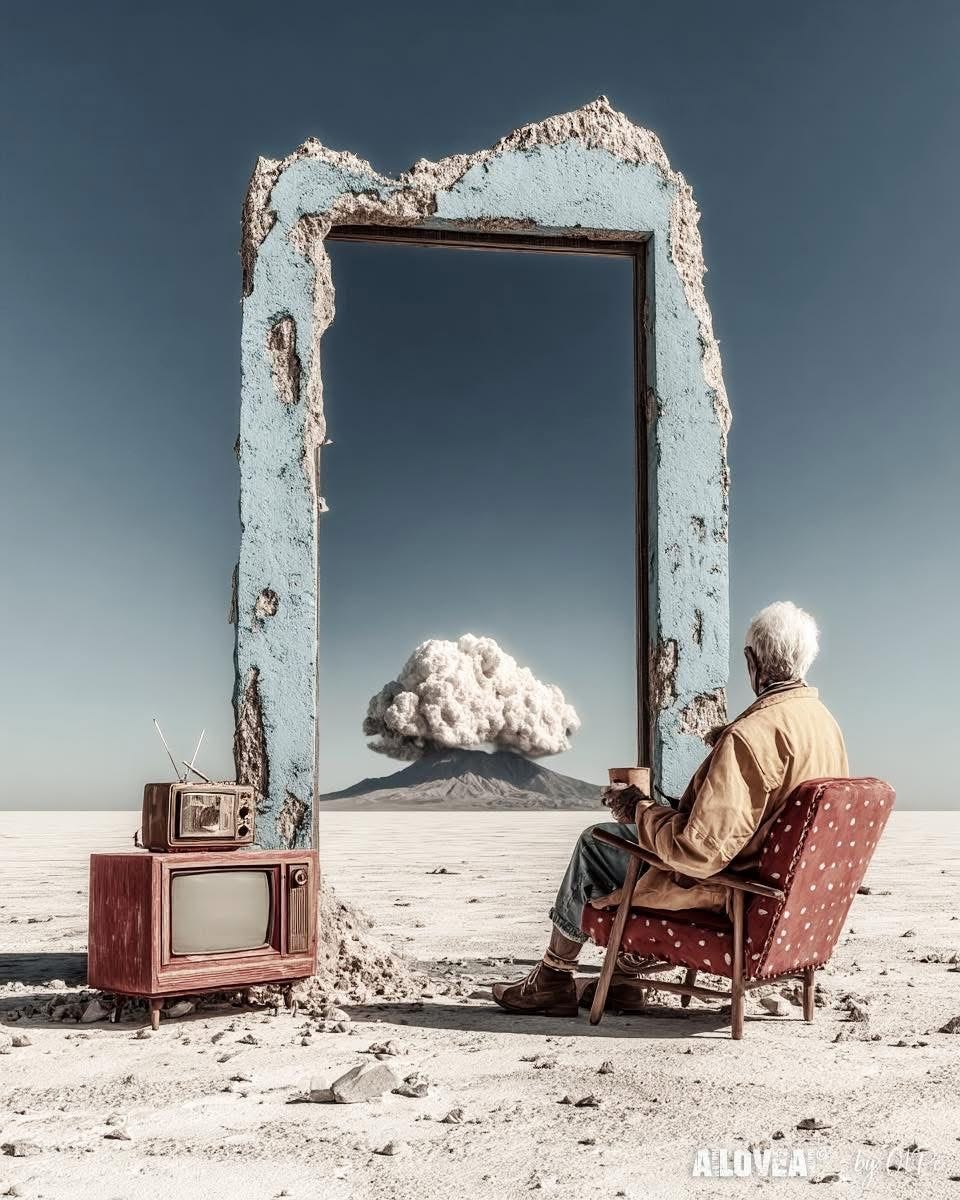
Let’s face it.
No one is really reading anymore.
People don’t actually read; they scan.
We skim. We scroll. We bounce.
Substack Notes?
Same deal. You think someone’s going to pause for your perfectly crafted 3-liner?
Spoiler: they won’t.
Unless… you hit them with something unexpected.
That’s where images come in.
The 3-second war for attention
Here’s what I learned the hard way:
If those few seconds don’t interrupt them, you’re invisible.
We live in a sea of blandness. Everyone’s smart. Everyone’s inspirational. Everyone’s yelling into the same void.
And honestly?
I was just another voice in the void.
Until I started posting Pinterest images with my Notes.
Not generic aesthetic stuff.
But images that stopped people cold.
Sharp. Strange. Sometimes even uncomfortable.
It’s not that people hate good writing.
It’s that they don’t even see it.
So I started treating each Note like a tiny ambush:
shock them with the image
hook them with the first line
keep them with a micro-story
That’s the whole method.
What works: scroll-stopping image psychology
I learned to look for images that trigger emotion or confusion.
Here’s what works for me:
A girl staring into a cracked mirror – makes you pause. Why is she doing that?
A rusted swing set in fog – moody. You feel something.
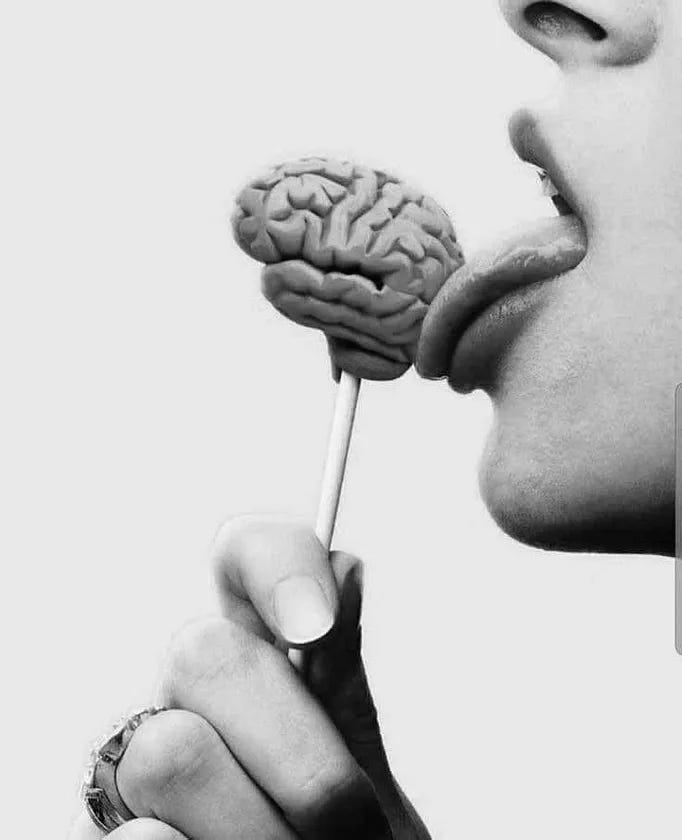
A girl licking a brain lollypop – ok that one went weirdly viral. No idea why.
The point is: these images act like a visual slap.
They interrupt the hypnotic scroll.
And once someone pauses, your words can do the rest.
But first, you need to earn that pause.
What doesn’t work: safe, cute, polite,…
I made the mistake early on of choosing “nice” images.
Soft pastels.
Pretty fonts.
A coffee mug on a desk.
Snooze.
People scroll right past it. Why? Because it looks like 100 other posts they’ve already seen today.
There’s a place for cozy.
But if your goal is attention, you need tension.
Why weird images win
Here’s something weird I learned:
The less realistic the image, the more real it feels.
Let me explain.
We live in the real world every day.
Bills. Traffic. Slack notifications.
So when people see an image that breaks the rules of reality, it wakes them up.
I call it bending the truth to tell the truth.
Sometimes the most honest way to communicate an emotion is through something that doesn’t even make sense logically.
Like a staircase floating in the clouds.
Or a typewriter with lightning coming out of it.
Or a woman with fish as glasses before her eyes (yes, I’ve used that one).
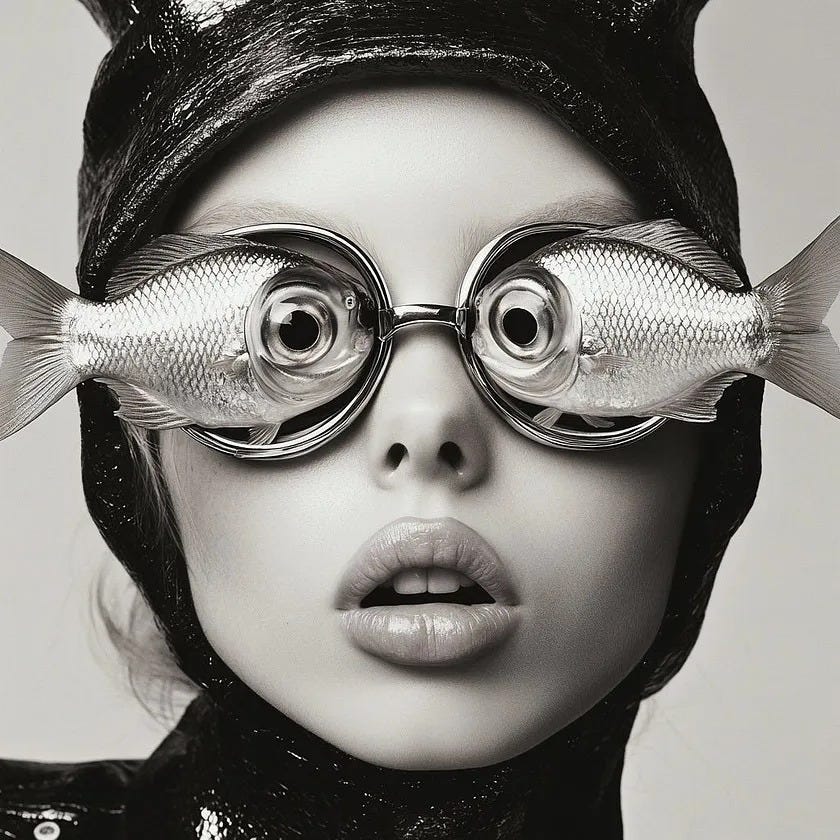
The goal isn’t to be weird for the sake of being weird.
It’s to capture a feeling that normal photos can’t express.
And the cool part? You don’t need to be a digital artist.
You can do this with:
AI image tools
a clever crop or filter in Canva
or even just searching for surrealist photography on Pinterest
Don’t be afraid to twist, distort, or remix your images until they hit the exact emotional tone you’re going for. You’re not trying to show reality, you’re trying to show what it feels like.
And sometimes reality just doesn’t cut it.
How I find the right images
It’s not rocket science. I literally type in weird stuff on Pinterest.
“chaos aesthetic”
“distorted reality”
“retro glitch”
“burning paper”
“surreal dream photography”
Then I scroll until I feel something. That’s my only rule.
If I scroll and stop, that’s the image I use.
No fancy filters.
No edits.
Just raw, emotional triggers.
Real results: I tripled my reach overnight
The first time I paired a Pinterest image with a short post, I tripled my reach in 24 hours.
Before that?
I was lucky if my own sister liked the post.
Now?
People notice. People engage.
People send me messages like:
“Love how you use images.”
“Intrigued.”
Mission accomplished.
Takeaways: Attention is earned visually first.
I used to think my writing would do the heavy lifting.
But that’s not how the internet works anymore.
You have three seconds.
And in those three seconds, it’s not your words that matter (first).
It’s what your words look like.
That might sound depressing. But it’s actually empowering.
Because if you can win the visual game, the rest becomes easier.
So here’s the formula:
shock them with the image
hook them with the headline
keep them with your story
Bottom line
People don’t want more content.
They want something that wakes them up out of their doom-scroll.
Use images that do that.
Pinterest is your secret weapon. (Or Canva if you have a premium account)
Go weird. Go bold. Go off-brand if you need to.
Just don’t go unnoticed.
